


Welcome to Uncharted
Behind every artist, writer, and dreamer lies a terrain of risks and discoveries that can’t be plotted in advance. To create is to wander into the unknown, guided less by certainty than by curiosity. Each guest is asked the same ten questions, but their answers reveal something far greater—an unfiltered glimpse into the raw and deeply personal terrain of a creative life.
Created by Connor Wolfe (they/them), founder of Wayfarer Books and Wayfarer Magazine, “Uncharted” is an invitation to step off the map and explore what it means to live and create beyond the expected.
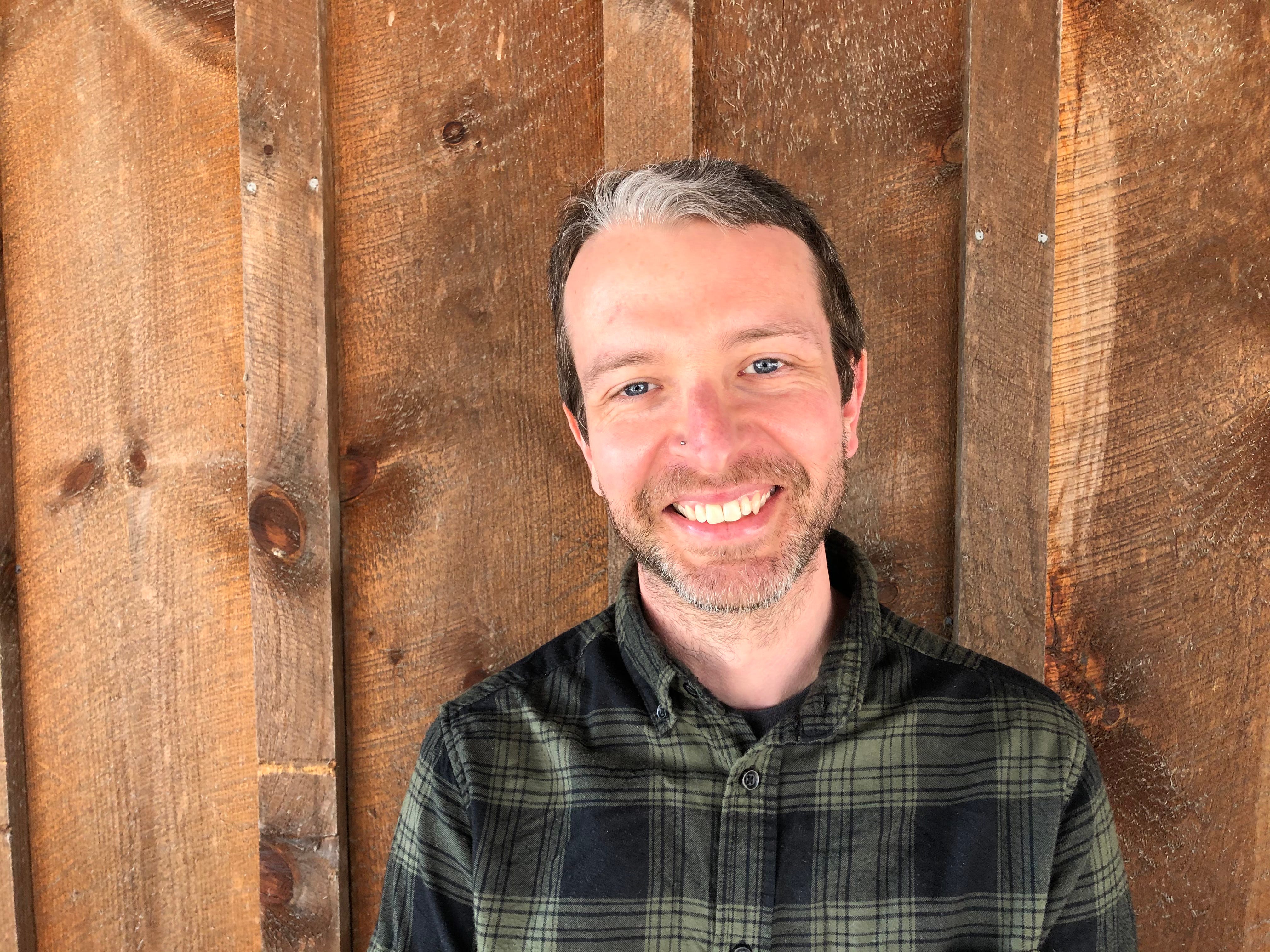
Uncharted with James Crews
On Kindness, Creative Rebellion, and Saying Yes to What Matters
Issue 43. October 2025
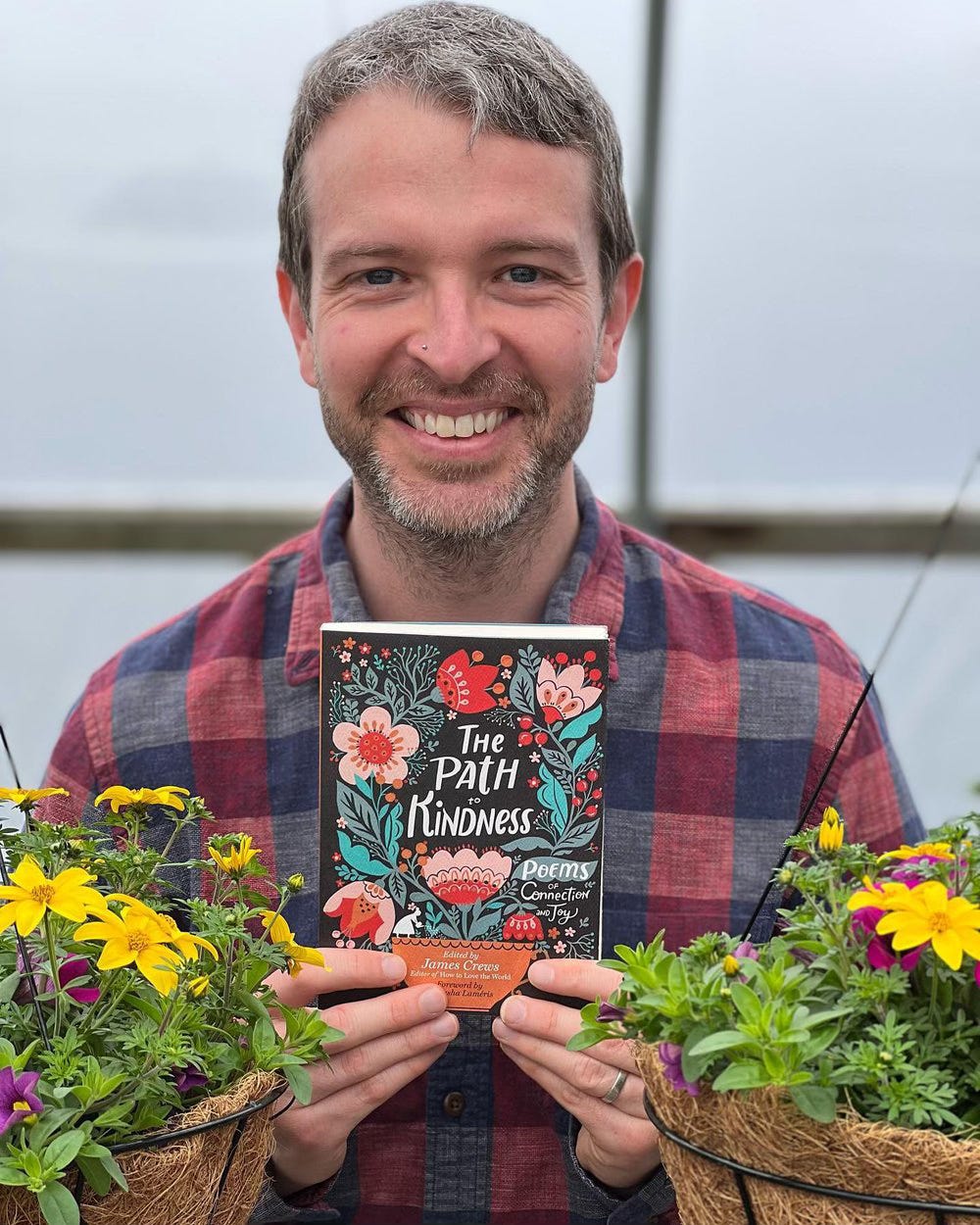
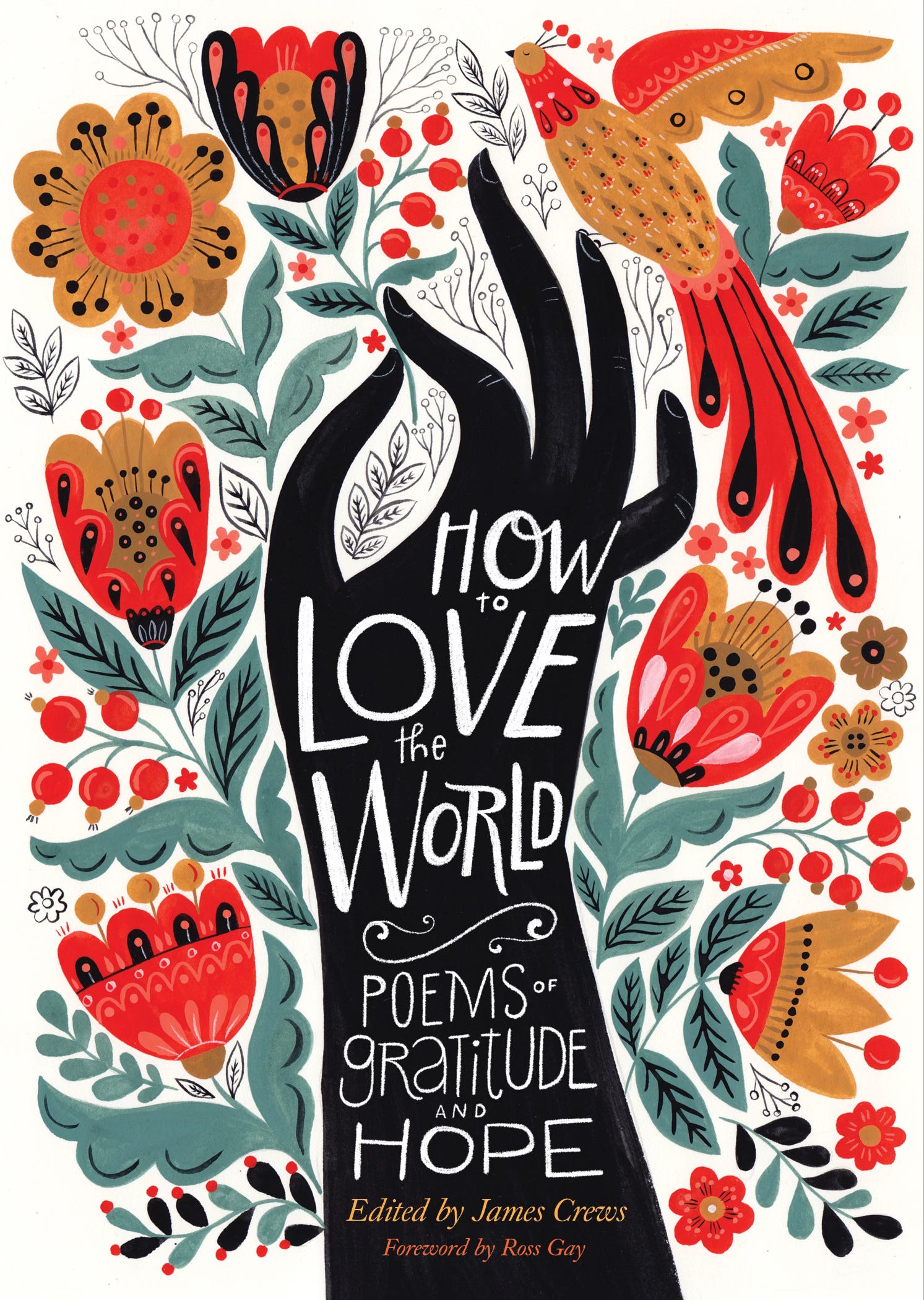
James Crews (he/him) makes a compelling case for attention, gratitude, and everyday grace. The editor behind the bestselling anthologies The Path to Kindness: Poems of Connection and Joy and How to Love the World: Poems of Gratitude and Hope, he’s been featured in The Washington Post, The Boston Globe, The New York Times Magazine, The New Republic, The Christian Science Monitor, and on NPR’s Morning Edition. Crews is also the author of four prize-winning poetry collections The Book of What Stays, Telling My Father, Bluebird, and Every Waking Moment as well as the short-essay collection Kindness Will Save the World: Stories of Compassion and Connection. When he isn’t speaking or leading workshops on kindness, mindfulness, and writing for self-compassion, he’s at home with his husband on forty rocky acres in the woods of southern Vermont. In the conversation that follows, Crews reflects on how poems can reorient us toward wonder, connection, and the steadier parts of a difficult world.
1. What’s lighting you up creatively right now?
What’s bringing me alive lately is creative freedom. I always start my days with a large cup of coffee and free-writing in my notebook for a few pages, practicing radical acceptance of whatever wants to come (what Julia Cameron has called “Morning Pages” in The Artist’s Way). It’s easy to fall out of this habit, to forget how important it is to give my heart and mind this kind of free range to explore. Just this morning, I felt lit up again telling the truth about what I love and don’t love about my life. And the thing that arose over and over, which has helped me to stay in creative flow, was stability. It’s not a very exciting notion for most creatives, but I realize that my daily practice of sitting down at my desk first thing and opening the door to whatever arises has helped me create a strong foundation from which the rest of the day unfolds. I often think of the well-known Ralph Waldo Emerson quote: “A foolish consistency is the hobgoblin of little minds.” I’ve often spurned stability and consistency as too boring and uninspiring. Yet in the last five years, the wise consistency of continually showing up every day to the page, and not seeking out the drama that once marked my life, has brought about more creative abundance than I ever could have hoped for.
2. What’s the last thing that truly captivated you—an idea, a place, a piece of art, a poem, a moment?
I have written elsewhere that “only moments matter,” and this is one of the mantras I try to live by. Both of my parents died quite young—my father at 43 years old, from complications of Hepatitis C, and my mother at 64 from sudden heart failure. Spending time with them in their final months and days showed me over and over that the so-called smallest moments are the ones that stay with us the most. The moment that sprang to mind when I first read this question may not seem all that earth-shattering or relevant, but I have carried it with me for weeks now. My husband Brad and I were walking a piece of land here in Vermont, where we’re trying to find a place to create a farm and retreat center. It was the perfect summer day, and we pulled over on a mostly deserted road to walk the unmown fields of the property. I’d been overly busy, and felt a little resentful that I’d taken time away from my packed schedule to drive the hour there and back. Yet as soon as we began to step through Queen Anne’s lace and goldenrod, a sudden sense of peace fell over me. I looked down to see a black swallowtail butterfly nectaring on a pink clover flower, and seemed to feel my soul at last rising to the surface again, just in this single moment of close attention. Ultimately, that piece of land didn’t end up being right for us, but that bit of what Anne Lamott has called “soul time” continues to stay with me, a reminder of what’s most essential, the space I need in my life through which to cultivate a sense of wonder. It’s as if watching that butterfly flex its wings and drink showed me again how I might nourish myself, spending time away from work, distraction, and news.
3. What’s a recent experience that made you feel deeply present?
I always feel most present when I am immersed in a poem or essay, or when I’m listening and responding to someone else’s work. I host a monthly writing community on Zoom called The Monthly Pause, and just a few days ago, I found all of my worries and fatigue falling away from me as I listened deeply and generously to what folks had written during our time together. I believe this practice of receiving, even living inside a piece that someone has created, makes me a better writer myself. I stay alert for phrases and lines that stand out to me, and reflect that back to the writer, focusing on what draws my attention. I do the same in my own work too, especially during the revision process. No doubt, this kind of generous listening seeps into daily life as well, making me more attentive, more alert to inspiration whenever and however it slips into me.
4. What’s a piece of art, a book, or a conversation that’s been living in your mind rent-free?
My best friend, whom I have known for 25 years now, recently visited me. As we walked through a local nature preserve, she confessed that she’s been struggling to stay present to where she lives, and to the work she’s doing right now. She foresees a move down the road eventually, but doesn’t want to just reject her daily experience, missing out on what’s actually there to appreciate. Lately, she said, she’s been seeing each new day as the perfect tangerine, round and fragrant and filled with its own particular sugars. It’s up to us whether or not we choose to feast on the tangerine of each given day, whether we even start to peel it, or decide to leave it untouched. Needless to say, this conversation has stayed with me, and has made me even more present to the gift of a new day, even when there are parts of my life I’d rather reject.
5. What’s the most rebellious thing you’ve ever done in your creative work?
One of the bravest things I ever did was publish my first anthology of poems focused on kindness, Healing the Divide. This was an act of rebellion for me not only because of the theme, but also because I gathered only accessible poems that spoke to a larger, more mainstream audience. I was teaching beginning creative writing at SUNY-Albany at the time, and the idea came to me following the 2016 election. The students in my classes came from diverse backgrounds, many of them from in and around New York City, and I could tell that, given the rhetoric and actions of our government, they were losing hope in humanity. Poetry has always been the lens through which I see and process the world, and so I thought it would be helpful to put together a book that might give them more faith in the future. The book I eventually published would go on to reach far more people than I ever could have dreamed, but I’ll never forget returning to Lincoln, Nebraska, where I had done my PhD, for a reading. One of my former classmates was commenting on the collection, and I told him how surprised I was by its success. “Well,” he said with a discernible sneer. “It’s not all that surprising. Target sells T-shirts with the word ‘kindness’ printed on them.” I could feel the sting of those words, meant to belittle the book and its accomplishments. But having been on a reading tour for the anthology, and seen how my own students and many other readers connected with these poems, I knew that, no matter what anyone else thought, this book would touch many lives, and give poetry a wider audience. I remain proud to this day that I said a difficult “yes” to this departure from the more “literary” projects I was trained by academia to pursue.
6. If your younger self could see you now, what would surprise them the most? What would disappoint them?
If my younger self could see me now, he would be shocked that I make my living speaking to large groups, leading workshops and retreats, publishing books. I first came to poetry in the third grade when my teacher Mrs. Brown required us to memorize and recite a poem to the whole class each week for a unit in our English class. I don’t even know where the thought first came from, but one week I found myself standing at her desk, turning five different shades of red as I asked her if I could write, memorize and recite one of my own poems. She clapped her hands, excited by the idea, and I became a writer in that instant. After I shared my poem, people came up to me—the quietest kid in class—and complimented what I had written, saying they couldn’t believe that came from me. It felt like a miracle, that something I had created out of nothing, sparked a reaction like this in people who had never even spoken to me. Since then, I knew I wanted to write, wanted to share my work, but I never thought I would be fortunate enough to do it as part of my job. I also never thought one could be both introverted and still comfortable enough speaking to large audiences. In spite of all this, I think my younger self would be disappointed that I sometimes lose myself too much in the business of “adulting,” and often stray from the wonder and awe that brought me to writing in the first place. This is something I’m working on right now, allowing myself what feels like an indulgent amount of time some days to “do nothing,” just walking or sitting in the garden, exploring a town I’ve never been to, sitting at a cafe for hours without the armor of my laptop and a task to do. This type of spaciousness feels necessary to my creativity. Yet the older I get, the more rare it seems, the easier it becomes to make excuses to avoid it.
7. What is a truth you’ve had to unlearn in order to grow?
One so-called “truth” I’ve had to unlearn is that an artist has to suffer in order to create their work. Because of our grind culture, and the myths surrounding creativity, I believed that if it felt too easy, it wasn’t worth doing. I’ve always worked hard, but I thought that writing should feel difficult, that I wasn’t living up to my potential somehow if I wasn’t struggling. I grew up in a very chaotic home where my father was often switching jobs, and we moved every few years, often falling behind in the rent. My mother also lived with agoraphobia and other mental illnesses, so stability was hard to come by. We never knew when she might have another panic attack, or when we’d have to move suddenly from a beloved house. I think I got addicted to constant movement and drama, and carried that over into my adult life and writing practice. In therapy over the years, and in my marriage with my husband, I’ve worked to unravel this addiction, and to embrace the fact that one can be a happy and productive artist—without all the drama. I’ve learned to follow what feels good, what flows more easily through my writing.
8. What question are you currently trying to answer through your work?
I lost my mother a few years ago. She had been ill for many years with multiple sclerosis and COPD, and I’d acted as her caregiver for most of my life. But her death came as a shock to my system, leaving me without a sense of equilibrium or purpose. I realize, looking back, that I took her for granted, even with the awareness that she was not well, and even given the fact that I had lost my father 20 years before. The recent death of Andrea Gibson, a poet who influenced my own work profoundly over the past few years, reopened this wound, and has me asking this question in my poetry and essays: How can I live close to death, and welcome the braided nature of sorrow and joy into my daily life, without also dwelling in anxiety and fear? In other words: How can I live without taking anyone or anything for granted? One thing that’s been helping in this quest is a quote from Andrea: “Remind me/all my prayers were answered/the moment I started praying/for what I already have.” To me, this speaks to our constant human dilemma, of how to radically appreciate what is right here in front of us, even in the midst of sorrow, even with life’s inherent imperfections and failures. Their quote also speaks to the realization that, when and if circumstances shift, we might ask for this very imperfect and beautiful life we spend so much time trying to escape. Most likely, someday, we will want it back.
9. What is pulling you forward right now?
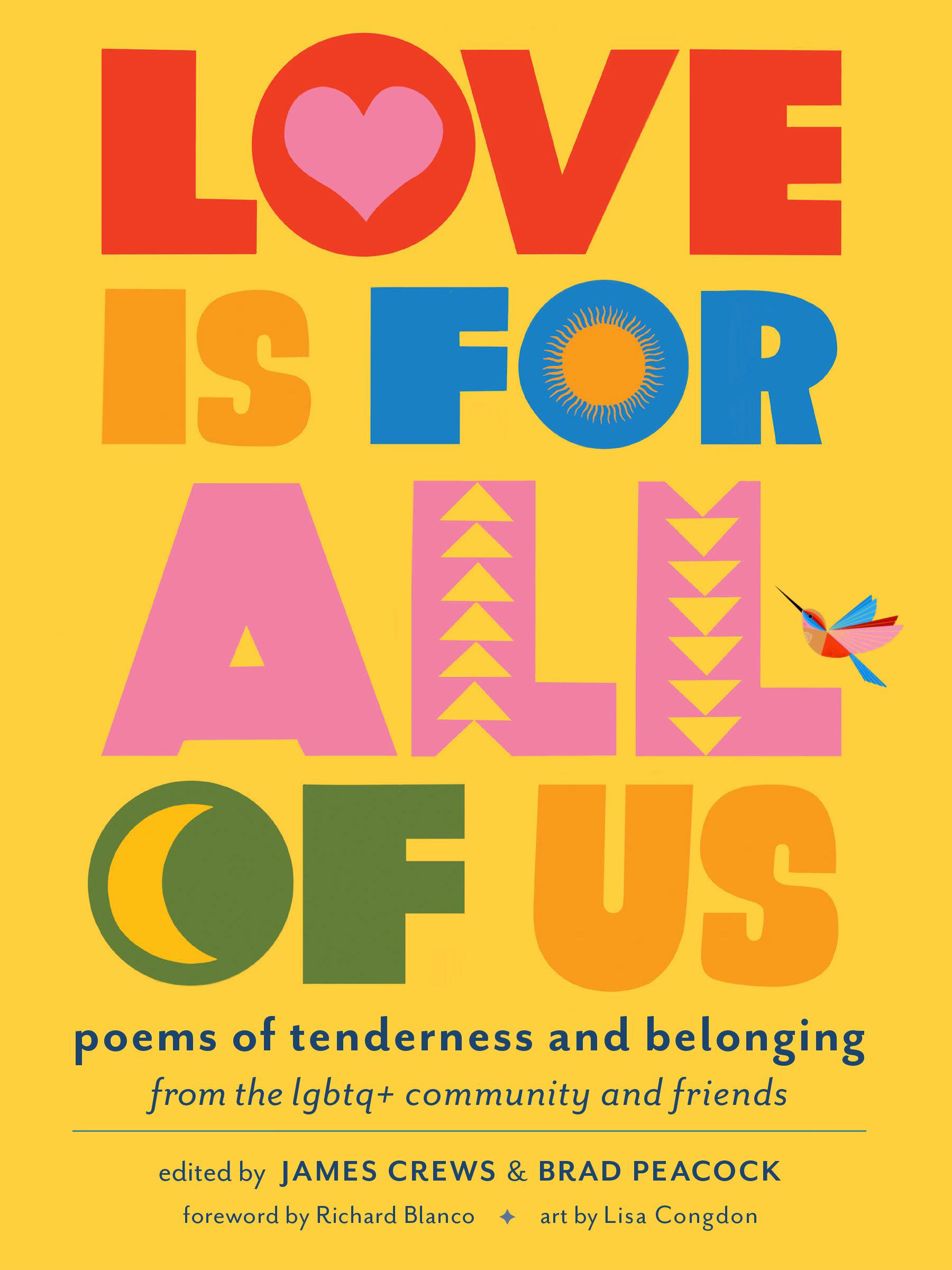
Honestly, some days not much pulls me forward. My heart breaks constantly for the ways in which our country has been overtaken by casual cruelty, the ways our government is ignoring the genocide in Gaza, the attacks on LGBTQ+ people, people of color, and vulnerable groups everywhere. It is very easy to lose hope in the face of such violent rhetoric and outright lies. One thing that buoys me is finding a sense of purpose, both in writing every day and sharing my work with others. My husband and I recently edited a book of love poems by LGBTQ+ authors and allies called Love Is for All of Us, and being out on tour for that anthology, traveling all over the country and visiting bookstores in many different communities, renewed our spirits. Gathering in the name of something larger than us as individuals—love, tenderness, and belonging—helped us and everyone who came to our readings tap into a deeper well of energy. I try to be very intentional with the work I create and put into the world. I want the poems, essays, and anthologies I share to help make our planet a kinder, more beautiful place. I also recently interviewed the singer/songwriter and poet Carrie Newcomer for my writing community, asking a similar question: What’s keeping you going at this fraught time? She replied simply, “Leaning into beauty.” When I heard her words, I felt an opening up of permission in my body and in myself to do the same. Right now, I’m watching endangered monarch butterflies, bumblebees, and hummingbird moths feed on the purple blossoms of butterfly bushes we have allowed to grow wild in our backyard. Small moments of beauty, and small kindnesses I offer and receive—what the awe researcher Dacher Keltner calls “moral beauty”—all help pull me forward on the best days. And remembering that they are possible on my worst days helps me look ahead to better times.
10. If your creative work is a map, where does it lead?
If my creative work is a map, I think it leads to more mystery. The more I practice writing and other forms of creativity, the less I feel I know. For a long time, I think I thought the map would lead to success, fame, or a teaching position as a professor—but it has only led me more deeply into myself and my own experience, more deeply into the mysteries that govern our existence. I was once lucky enough to take a weeklong workshop with the poet Li-Young Lee, and I’ll never forget what he said: “Writing is a self-clarifying act.” As we move through the layers of self, however, we keep finding more layers. More and more lately, I seem to have left behind all maps, and now feel guided by Something I don’t quite understand, but which feels both present and real. I retrieve and receive more than I believe I actually create. I don’t mean to say that I don’t still strive, but it feels more like an act of service to what the poem, essay, or book wants to be, rather than what I want it to be. More often, I am trying softer instead of harder. If my creative work is a map at all, I suppose it’s one of those complex, nearly indecipherable subway maps with countless stops on the journey—but with no discernible destination. At one point, this might have felt frightening to me, but what a joy it still is to ride this train, getting on and getting off where it feels right, not needing to know where I’m headed anymore.

Oh “ to not need to know where i’m going…”
What a wonderfully curated list of questions (and responses)! For anyone who lacks something to pull them forward right now, in these trying times, I would offer something that helped me navigate the past year and a half: Search daily for wild beauty. Nature is healing. You can find it in cities, suburban and rural areas, parks and wildlands. After experiencing a series of personal and natural losses in 2023, I started a daily habitat of looking for wild beauty and found it in broken and healed places alike. Life finds a way, sometimes we just have to go looking.