


To those who have recently joined ICE,
I want to begin with something you almost never hear in public: I can understand why this job may have appealed to you.
You may have been drawn by the promise of a steady paycheck and benefits, by the dignity of service, by the feeling that you’d be doing something real in a country that often feels unmoored. You may have wanted structure. You may have wanted to protect your community. You may have wanted to be the kind of person who shows up and does what needs doing.
I grew up around people like that.
I knew people who rose before dawn, who kept a thermos in the truck and a quiet code in their bones: work hard, keep your word, don’t complain, provide for your people, respect the law. They weren’t saints. But they weren’t villains either. A lot of what is decent in a society is built out of those instincts.
And yet those same instincts can be recruited by a system that is no longer asking you to protect what is right, but to participate in what is wrong.
In a neighborhood like mine, you see it in small, ordinary disruptions: a dad who always waved from the stoop stops coming to the block cookout because he’s afraid of being seen. A woman at church who used to linger after the benediction now slips out early, head down, like she’s trying not to be remembered. A kid shows up to school carrying a manila envelope of documents—papers he can’t read but has been told might save his mother if someone knocks. Curtains stay drawn. A certain kind of silence settles in, and it isn’t peace.
That’s what it looks like when state power shows up in local life as something unpredictable and unaccountable. It doesn’t only remove people. It rearranges neighborhoods. It trains children in dread. It turns ordinary bonds of community into liabilities.
There is a relevant scene in Henry David Thoreau’s “Civil Disobedience”. Thoreau refuses to pay his taxes because he will not finance a government waging a war he views as unjust. The tax collector who comes to see him is not a stranger sent from a distant capital. He’s local. He knows and respects Thoreau. He stands there caught between duty and conscience, and asks Thoreau what he should do.
Thoreau doesn’t offer a workaround. He doesn’t offer a clever compromise. He tells him that he must quit.
Not because the collector is inherently evil. But because the collector has become the human instrument by which an unjust act is made manifest in the world. The machine moves through him. Thoreau understood that when a system is immoral, participation is not morally neutral. He urges people to become “the friction that stops the machine.”
This letter is written in that spirit. This is not an accusation against your character, but an appeal to your conscience.
Because I do not believe most ICE agents are animated by cruelty, racism, or a lust for domination. I do not believe you joined because you woke up wanting to terrify families. I suspect many of you joined for the reasons most people take on hard jobs. You wanted stability, dignity, and a chance to serve. But unjust systems do not need people who think of themselves as evil. They need people who are willing to outsource moral responsibility upward.
So, I want to name what this letter is and is not. This is not an argument for open borders. It is not a claim that immigration laws should be meaningless. A nation can and should enforce immigration law and maintain secure borders. But a constitutional republic cannot enforce laws by hollowing out its own constitution.
There are lines a free society cannot cross without becoming something else. Probable cause, warrants, courts, judicial oversight, and access to counsel all matter. Due process is not a courtesy we extend when we’re feeling generous. Force must answer to law, and law must answer to justice.
If you are being asked to participate in actions that treat constitutional rights as obstacles to be overcome, then the moral question is already at your doorstep. You are not simply “enforcing the law.”
You will be told this is overreaction. You will be told you don’t see the big picture. You will be told that your discomfort is immaturity, and professionalism means swallowing it. The language will always be available to make conscience sound childish.
Do not doubt for a second that participation changes you.
Not all at once. It changes you in small ways first. By what you learn to laugh off and what you learn not to notice. It changes you when you start narrating your own actions in plural terms. It changes you when you begin to feel less because feeling interferes with efficiency.
This is why I’m making the appeal, not only for the sake of those you may be ordered to harm, but for your own sake as well.
There is a kind of wound that forms when your work and your conscience diverge. It doesn’t always look like guilt at first. Sometimes it looks like numbness. Irritability. A hardening. A contempt for “soft” people. Sometimes it looks like a private shame you can’t articulate to anyone who hasn’t been there. You cannot live at peace while doing what you know to be wrong.
So, what are you supposed to do?
As has been reported this week, a former ICE instructor and attorney, Ryan Schwank, resigned and then went before Congress to say, in plain language, that the training program for new recruits is now “deficient, defective, and broken.” He described recruits being pushed through with less preparation for the legal limits of their authority, and he warned that officers who do not know their constitutional duty—and do not know the limits of their role—should scare everyone. That is what friction looks like.
If the job begins to ask you for silence in exchange for belonging, refuse the bargain. If it asks you to call cruelty “policy,” refuse the language. If it asks you to stop seeing the person in front of you, refuse that, too. Name what you see. Tell the truth. Withhold your cooperation from what you know is wrong. And if the work requires you to become someone you cannot respect, leave.
Aleksandr Solzhenitsyn offered a vow during his Nobel Lecture: “You can resolve to live your life with integrity. Let your credo be this: Let the lie come into the world, let it even triumph. But not through me.” Not through my hands. Not through my mouth. Not through my silence. Not through my paycheck.
That is the appeal I am making to you now.
If you came for stability, consider what instability it will plant in you to become the face of fear for people who have rights, too—rights that do not evaporate because an agency wants results. If you came for honor, remember that honor is not mere obedience. Honor is the willingness to refuse an unjust order. If you came to serve your country, remember that your country is not identical with any single agency’s mission in any single moment. A republic survives when ordinary people refuse to let its founding promises be hollowed out in the name of expedience.
Maybe tonight, or tomorrow morning, you’ll drive home and pull into a spot you’ve parked in a hundred times. Maybe you’ll sit for a moment with the engine off, listening to the ticking of cooling metal, the quiet of the street. Maybe you’ll look at the uniform hanging in the back seat or folded on the passenger side and feel that familiar tug—pride, duty, dependability.
Hold that feeling up to a harder question. Dependable to what?
The machine can always find new hands, but it cannot force you to volunteer yours.
If you want to serve, there are other ways. There are other uniforms. There are other jobs where your discipline and courage can protect the constitutional order instead of eroding it. You can take the part of you that wanted to do something honorable and offer it to work that does not require you to numb your conscience.
If you cannot see the full path yet, then do the first necessary thing. Stop pretending you don’t know what you know. Stop laundering moral reality through bureaucratic language. Tell the truth to yourself. Then take the next step that truth requires.
And if the moment comes when the only honest step left is to hang up the uniform, do it. Quietly, if you must. Publicly, if you can. But do it.
There is a dignity in that refusal that no badge can confer.
You still have that choice.
Let evil come into the world if it must—but not through you.
With respect, and with great urgency,
Brandon McNeice
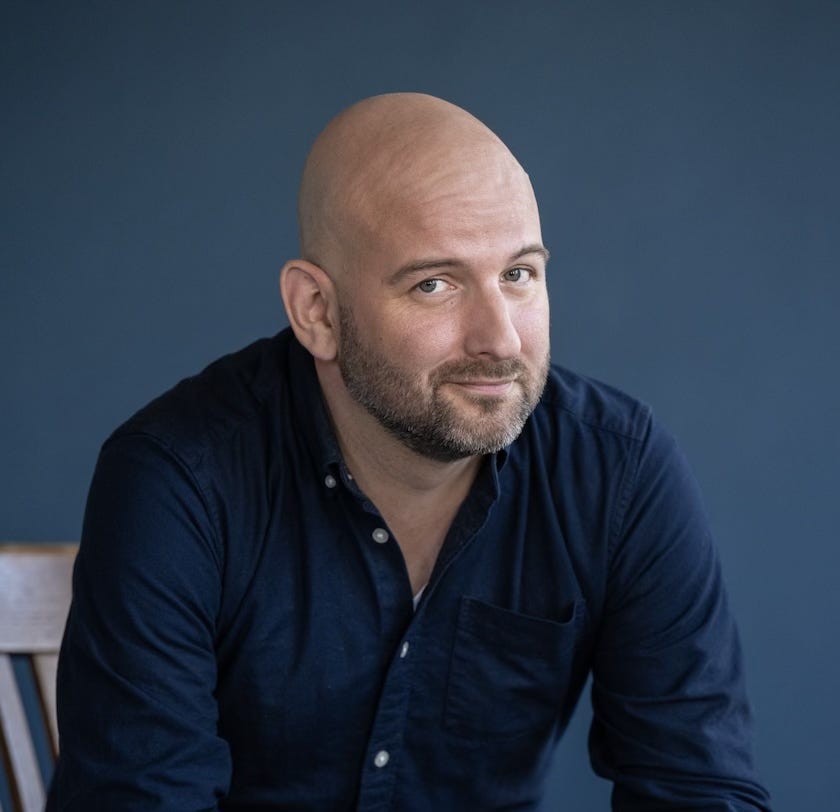
Brandon McNeice (he/him) is a Philadelphia-based writer and educator. His work has appeared or is forthcoming in Commonweal, Plough, SmokeLong Quarterly, Flash Frog, Hunger Mountain, Flyway, Bending Genres, and ONE ART. A two-time Best Small Fictions nominee, he writes about the daily negotiations by which people seek dignity, faith, and decency inside systems that are anything but simple.
